Home

The Zendo

Programs

Beginner's Zen

Calendar

Teacher

Membership

Donations

Store

Scrapbook

Reach Us


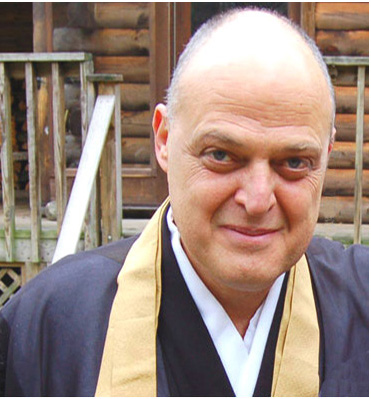
Genro Lee Milton, Sensei is the resident teacher and abbot of Endless Mountain Zendo. His formal Zen studies began in 1976 with Eido Shimano Roshi of The Zen Studies Society by whom he was ordained and trained as a Zen monk in the Rinzai Zen tradition. Genro served as resident director of New York Zendo, Shobo-ji in New York City (1981-1988) and Plum Tree Zendo in Philadelphia (1988-1998). He came to Stillwater in 1998 to establish Endless Mountain Zendo. In a ceremony conducted by Jiro Andy Afable Osho of Wild Goose Zendo, Genro was acknowledged as a Dharma teacher within the Rinzai Zen school. Genro has also presented Zen to many academic, religious and special interest groups.

A Beginner’s Tale

 Driving to Dai Bosatsu Zendo for my first sesshin, I listened with interest to the conversations of those who’d done sesshin before. One was talking about getting past the first few days of sesshin, a time, everyone seemed to agree, when troublesome things come up, the things that we are generally able to ignore but that stay with us all the same. I wondered what, if anything, my stuff would be. I don’t remember exactly what I said, but it had to do with “the stuff”: Everyone looked at me and someone replied, “You haven’t done sesshin have you?”
    I’d been doing zazen devotedly for about two years; the first year by myself and by the second year, I’d started going regularly to New York Zendo in Manhattan.  I counted my breath with the enthusiasm of one who believed the next breath might bring a wonderful realization. I’d sit anywhere, anytime so long as I wasn’t too conspicuous. I’d use my sneakers for a zafu if I was in the park or close myself into a closet at work during lunch. And a little knee pain was no problem. I’d just count my exhalations and breathe into the pain as had been suggested. I’d discovered that this was the best thing to do.
For months I’d looked forward to this event, and it was finally at hand. 
    This was Dai Bosatsu’s first Holy Days Sesshin. I was very impressed by the intensity and liveliness of the scene there, and everyone seemed experienced and senior. I’d met no one as green as me.  There were about fifty participants, and after an informal supper, we cleaned the tenzo (kitchen) and about an hour later, we were sitting in the zendo listening to our teacher, Eido Shimano Roshi, exhort us to do our best. I was inspired, and sesshin was on.   
    For those who don’t know, sesshin is a meditation intensive, generally seven days long. It is a very challenging event, with many hours (about 12) spent in the meditation hall each day. Oftentimes, students who want to do seven-day sesshins will prepare themselves incrementally by doing daylong and then weekend sesshins first. But I opted to bypass the gradual style and jumped in. 
    The first full day began with a 4:30 wake-up with someone running down the halls clanging a bell. Soon we’d be spending a lot of time sitting cross-legged on our cushions. About mid-way through the first full day, I’d begun to have a lot of pain, and as the day progressed, it intensified and by the close of the day at 10 p.m., it was far beyond anything I’d experienced before. It was excruciating and each meditation period had become a struggle to make it to the end. This wasn’t what I’d expected at all and I was in shock: Indeed, those ‘troublesome things” I’d heard about earlier were coming up. But finally, the first day was completed. In my dorm room, I sat on my futon, knees throbbing, wondering how I could possibly do one more day of that. And there were six days left. Impossible. As I sat there, the walls began to swell and undulate and I felt on the verge of some fearful hallucination and loss of control. But I managed to go to sleep.     It seemed that just a moment passed before the clanging of the wake-up bell jolted me into consciousness and the dreadful awareness of what lay ahead. And as it turned out, day two was like the first except that the struggle began immediately. I must have been resolved to stay until the end, but I’d come to the conclusion that my Zen practice days were over as soon as I left that mountain. This kind of practice was nothing short of a crucible and I wasn’t suited for it. I’d have to find an easier way.
    But in spite of the difficulty, the practice of breath counting was steady from the first sitting of Holy Days to the end. This practice had become well established for me prior to sesshin, and that was a blessing. The kinhins (walking between sitting periods) offered relief and a new lease on life before another dreadful period of struggle would begin. This is the way sesshin went. And the underlying feeling that my Zen studies would not continue beyond this event was depressing to say the least.
    On the third evening, we chanted “Mu” during kinhin. With steadiness and great composure, we walked in single file around and through the zendo intoning this single note. The atmosphere was filled with this deep, unbroken sound and after a few minutes, I began to hear this tone as the voice of humanity: To me it seemed to express all the sorrow of the world and an equally profound longing for the relief of love and compassion. In this, I felt, we were all united and all of us were truly brothers and sisters.     Absorbed in this universal voice, tears began to flow and things became so clear and beautiful in that kinhin corridor. I was relieved for a short while of my personal problems and relieved to glimpse something greater than my self. It was obvious that the wonderful moments of this vision were rare and came from the penetrating nature of Zen practice.  That was very encouraging.
    Day four was the middle day of sesshin. When lunch came, everyone as usual filed out and went to the dining hall. I slipped out of line and returned to my seat in the zendo for a solitary sitting. When the sesshin participants returned, with everyone standing by their seats, I was scolded for breaking the schedule.
    In the afternoon, the Diamond Sutra was chanted. It is a long chanting event requiring a lot of concentration. It can be a very strong breathing practice as well, so that by the time all is quiet and zazen begins, it is likely to be a very stable and dynamic period of meditation. Eido Roshi would consistently extend the length of this period to an hour or more. And so it was on that day.
    As usual, the pain came and intensified. And as usual, there was concentration on breath and the steady count to the bottom of each exhalation, and then another breath and so on. And then, out of the blue, something unbidden happened. One moment, I was in the midst of a dense cloud of radiating pain, resistance and aversion, and the next moment, the cloud dissolved into an open sky of pure awareness. Sensations vanished and an atmosphere of serenity and subtle joy dawned and absorbed me completely. The bound and weighted sense of this body and mind vanished in an instant and my inner vision was unobstructed and open. In this mind of profound contentment, I simply looked into boundlessness. Doubt, irresolution, negativity, fear - All was swept away.
    I felt saved. I was confident and fearless for the remainder of sesshin and deeply happy. I said to myself, “I have seen the face of Kanzeon.” I had been bathed in transcendental compassion, a reality so subtle and quiet that it goes unnoticed in the noise of our ordinary perceptions. I wished only to see more deeply into the true nature of things, and I was set more firmly than ever on the way of Zen.
    Thirty-four years have passed since that Holy Days Sesshin. And here on Endless Mountain we will soon to enter Spring Sesshin. That is a happy thought. As always, we are looking forward to it and to see what we will see.

For more Messages from Genro Lee Milton click here

Endless Mountain Zendo, 104 Hollow Road, Stillwater, PA 17878


Home The Zendo Programs Beginner's Zen Calendar Teacher
Membership Donations Store Scrap Book Reach Us